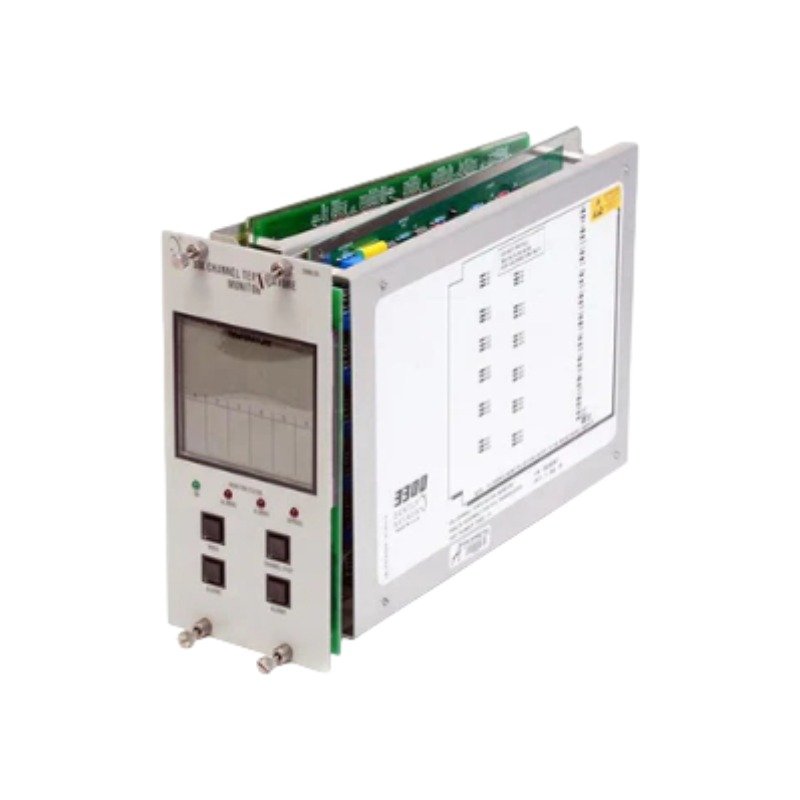
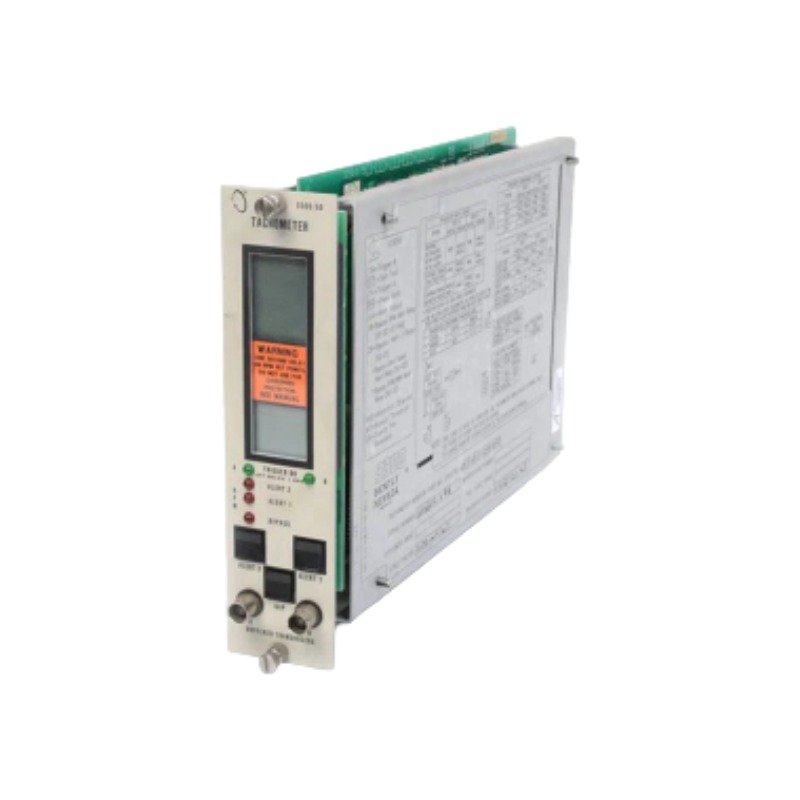
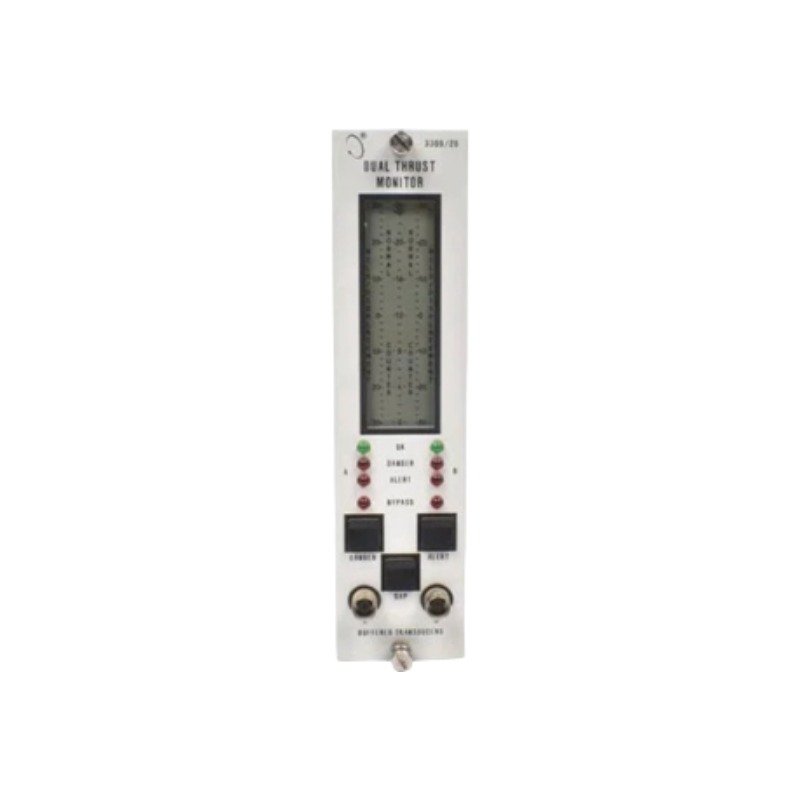
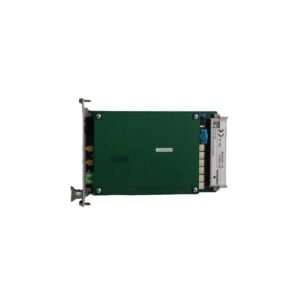
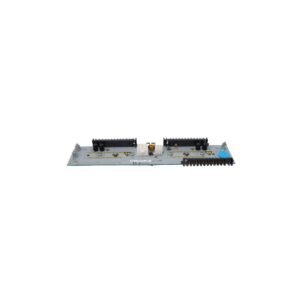
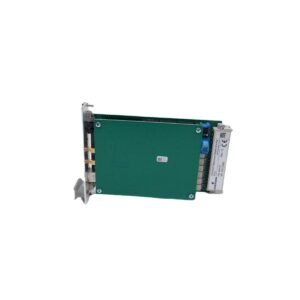
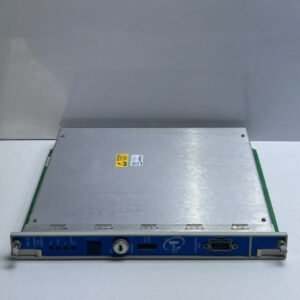
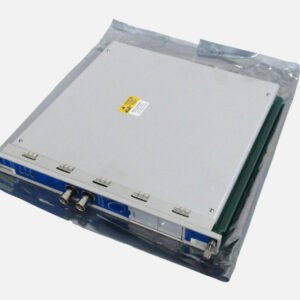
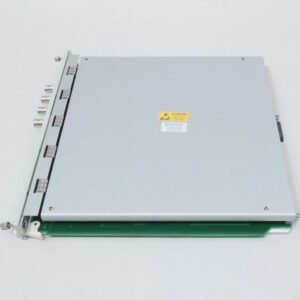
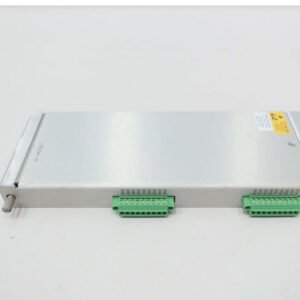
The Bently Nevada 3300/55-03-01-15-15-00-00-01-00, also cataloged as the 3300/55 Dual Velocity Monitor, operates as a dedicated hardware component for continuous vibration monitoring within machinery protection systems. Specifically, the system processes high-frequency signals from two independent velocity transducers, thereby converting raw physical casing vibration into real-time velocity metrics (measured in inches per second or millimeters per second) and proportional 4-20 mA recorder outputs.
Suffix Breakdown & Model Matrix
The complete alphanumeric product code structures the specific hardware configuration factory-installed into this velocity tracking block assembly:
Option Field
Ordered Suffix Code
Functional Component Definition
Transducer Type
03
9200 or 4740 self-generating velocity transducer systems
Agency Approval
01
CSA / NRTL / C Class I, Division 2 groups A, B, C, D
Full-Scale Range A
15
0-1.0 in/s (inches per second) peak velocity scaling on Channel A
Full-Scale Range B
15
0-1.0 in/s (inches per second) peak velocity scaling on Channel B
Machinery Monitoring and Transducer Interface Dynamics
The processing hardware executes real-time eddy-current probe scaling to accurately translate physical displacement into precise electrical potentials. Consequently, gap voltage validation enforces an operational baseline of -10 VDC for standard proximity sensors, which ensures that the transducer maintains its linear range during high-frequency rotor dynamics observations. Furthermore, dynamic signal isolation circuitry constrains cross-talk suppression to under -60 dB across adjacent measurement paths, thereby preventing electrical resonance interference from corrupting critical vibration calculations.
Frequently Asked Questions
Q: How does the 3300/55 handle channel status if a seismic velocity transducer wire breaks?
A: The monitor continuously tracks the structural bias current loop of the self-generating velocity sensor. Consequently, an open-circuit fault in the field wiring causes the internal diagnostic engine to immediately drop the channel OK relay, illuminate the “NOT OK” front panel LED, and block that channel from executing false interlock shutdowns.
Q: What specific hardware advantage does the Suffix 01 Relay Option provide over a standard rack configuration?
A: The 01 suffix installs physical, dedicated SPDT relays directly inside the monitor module. As a result, the unit executes localized Alert and Danger trip commands directly from its own terminal block interface, providing faster execution independent of the shared rack backplane relay bus.
Field Installation Guidelines
Field Wiring and Shield Terminal Isolation: Wire the transducer shielded twisted-pair cables directly to the rear backplane terminal block assignment. Next, isolate the outer shield braid completely at the sensor housing end, and then terminate the drain wire only at the designated rack ground bar to block induced magnetic field noise loops.
Low-Frequency Noise Avoidance: Run all dynamic velocity sensor cables inside dedicated rigid steel conduits. Specifically, isolate these signal channels from neighboring high-amperage variable speed drive outputs, power lines, or motor control grid wiring to prevent electrical noise injection.
Module Retaining Screw Engagement: Slide the monitor firmly along the guide tracks until the edge connectors lock flush with the backplane pin field. Afterwards, torque the upper and lower captive panel fasteners to establish full chassis ground bonding across the aluminum enclosure front plate.
Additional information
Weight
1.10 kg
Dimensions
50 × 65 × 70 mm
0.0
Average Rating
Rated
(0 Reviews)
Rated
0%
Rated
0%
Rated
0%
Rated
0%
Rated
0%
Be the first to review “Bently Nevada 3300/55 Dual Velocity Monitor” Cancel reply







0.0 Average Rating Rated (0 Reviews)