Order the Bently Nevada 24583-04 high-temperature proximity device. Available as Brand New, Original Stock with fast Global Shipping options worldwide.
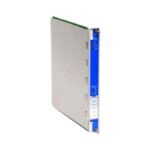
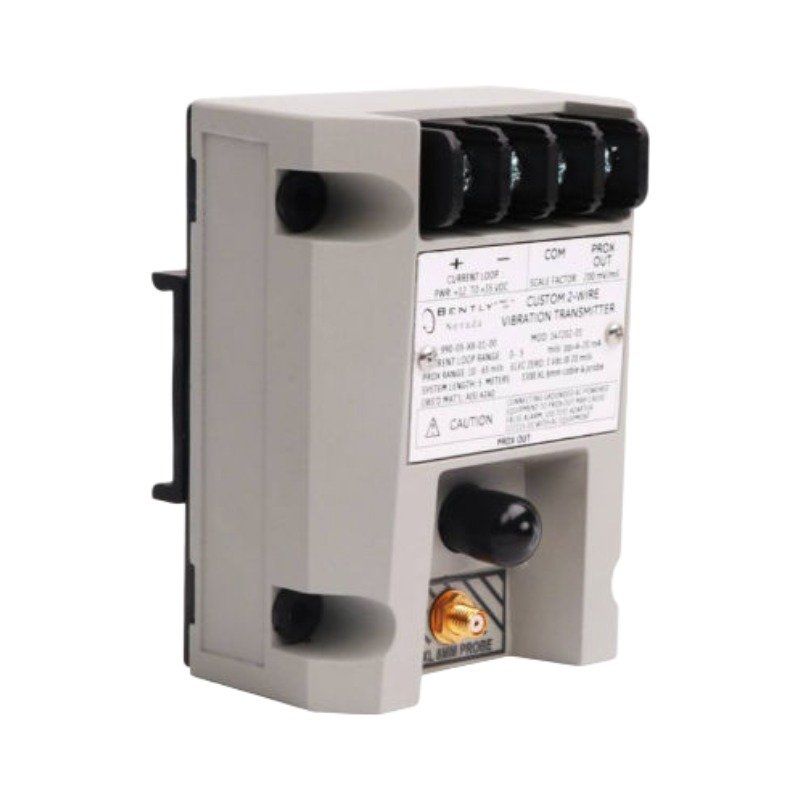
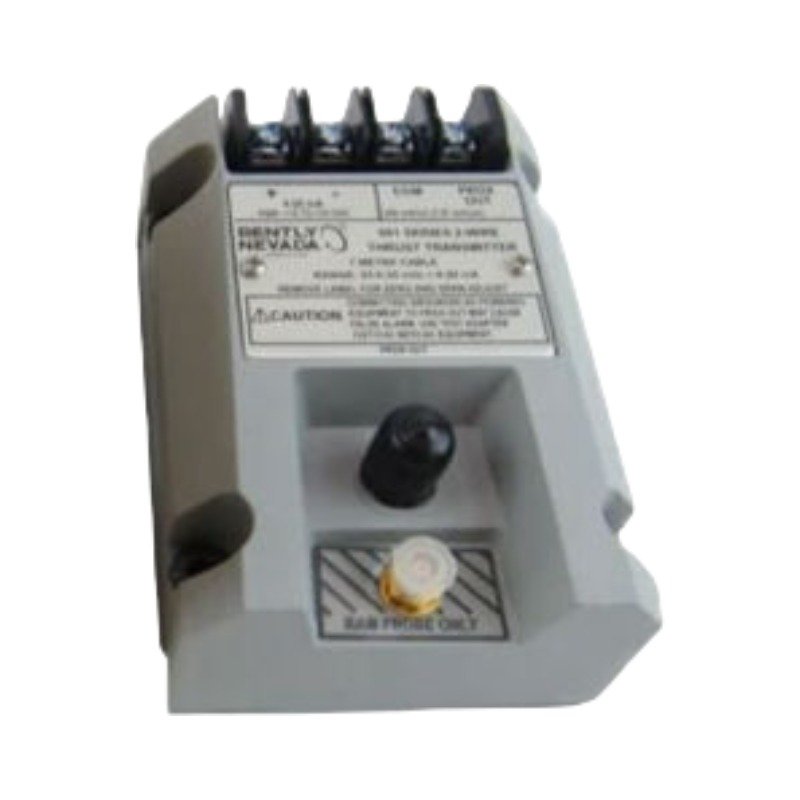
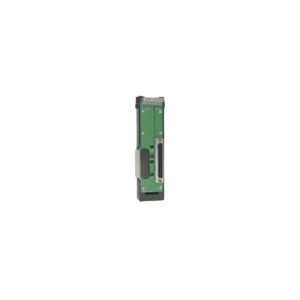
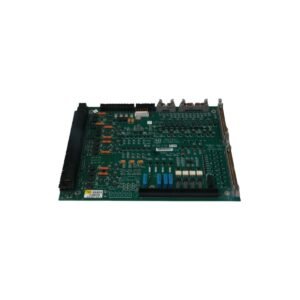
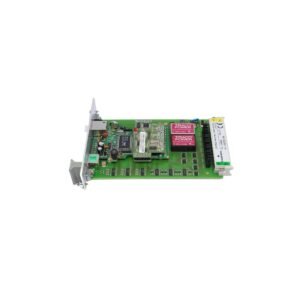
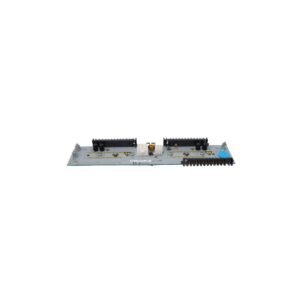
The Bently Nevada 24583-04, also cataloged as the 24583 High-Temperature Proximitor Sensor, operates as a dedicated hardware component for generating radio frequency excitation and conditioning proximity signals within specialized, extreme-environment machine housings. Configured for non-contact displacement monitoring near thermal machinery interfaces, the assembly provides direct physical and electrical execution by translating raw eddy-current variations into linear analog metrics.
Hardware Specifications
Parameter
Specification
Model
24583-04
Brand
Bently Nevada
Origin
USA
Sensor Type
High-Temperature Proximitor
Nominal Probe Diameter
50 mm (2.0 inches)
Output Type
Analog voltage proportional to target distance
Weight
0.29 kg
Dimensions
82.6 mm x 63.5 mm x 50.8 mm housing envelope
Operating Temp
Up to 150 deg C (housing limits)
Power Consumption
0.8 W nominal
Supply Voltage Requirement
-18 VDC to -24 VDC
Eddy-Current Probe Scaling and Rotor Dynamics
The heavy-duty solid-state processing element guarantees stable eddy-current probe scaling when operating near thermal boundaries where standard material expansion distorts signal curves. The oscillator core feeds high-frequency driver waves into the matched transmission network, establishing precise gap voltage validation profiles across the active measuring window. Because thermal changes shift impedance coefficients, the structural circuitry incorporates dynamic cross-talk suppression and thermal drift dampening matrix routines. This hardware insulation layout preserves true phase reference signals and radial clearance readings, protecting critical rotor dynamics calculations from inductive spikes.
Frequently Asked Questions
Q: Does this high-temperature sensor unit tolerate direct fluid submersion at its peak thermal limit?
A: No, while the sensing element withstands high ambient thermal exposure, the electrical terminal junction demands dry, clean conditions. Liquid immersion degrades the core loop capacitance, resulting in calibration drift or total signal dropout.
Q: What is the accurate termination procedure for correcting a floating output voltage reading on this device?
A: A floating reading typically indicates an open shield path or improper common reference. You must verify that the COM terminal tracks the monitoring rack common return path and confirm that the coaxial outer shielding stays continuously isolated from local machine frame ground.
Field Installation Guidelines
Mechanical Isolation Grounding: Mount the housing base plates securely onto a flat, vibration-free panel layout. Maintain strict physical isolation between the sensor shell and adjacent structural steel to prevent parasitic current loops.
Conduit Entry and Drip Loops: Form an explicit drip loop in the flexible metal conduit immediately before it couples to the sensor body hub. This mechanical layout routes condensation away from the seal face, stopping liquid accumulation within the terminal tray.
Terminal Interface Fastening: Terminate field cable paths using crimped pin lugs directly onto the screw block interface. Torque the binding screws to 0.56 N-m (5.0 in-lb) maximum to avoid stripping the internal terminal board mounts.
Additional information
Weight
0.29 kg
Dimensions
320 × 80 × 50 mm
0.0
Average Rating
Rated
(0 Reviews)
Rated
0%
Rated
0%
Rated
0%
Rated
0%
Rated
0%
Be the first to review “Bently Nevada 24583-04 High-Temperature Proximitor Sensor” Cancel reply








0.0 Average Rating Rated (0 Reviews)