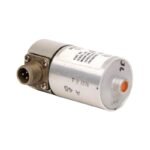
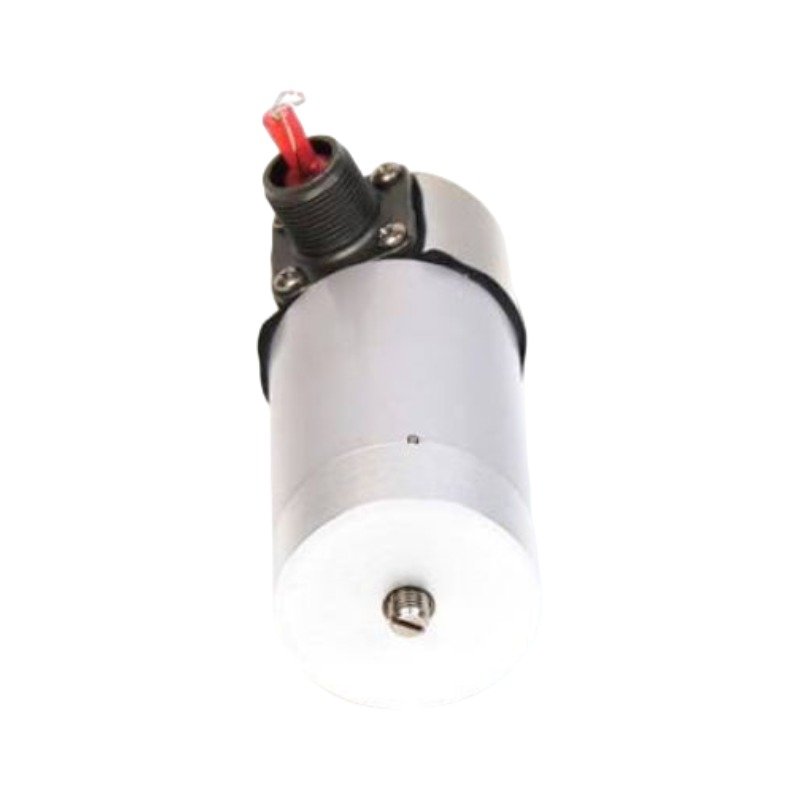
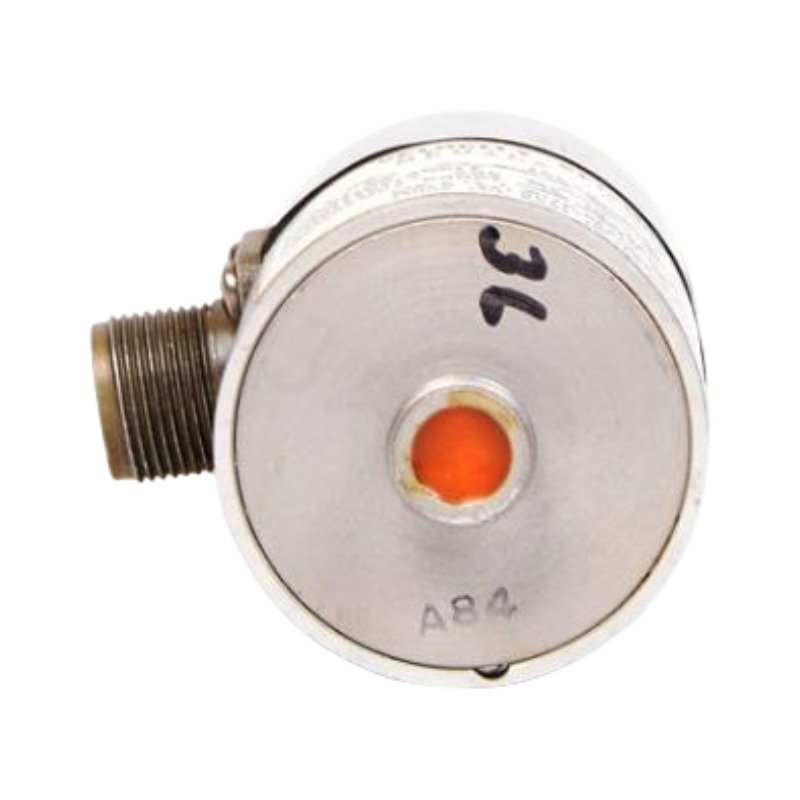
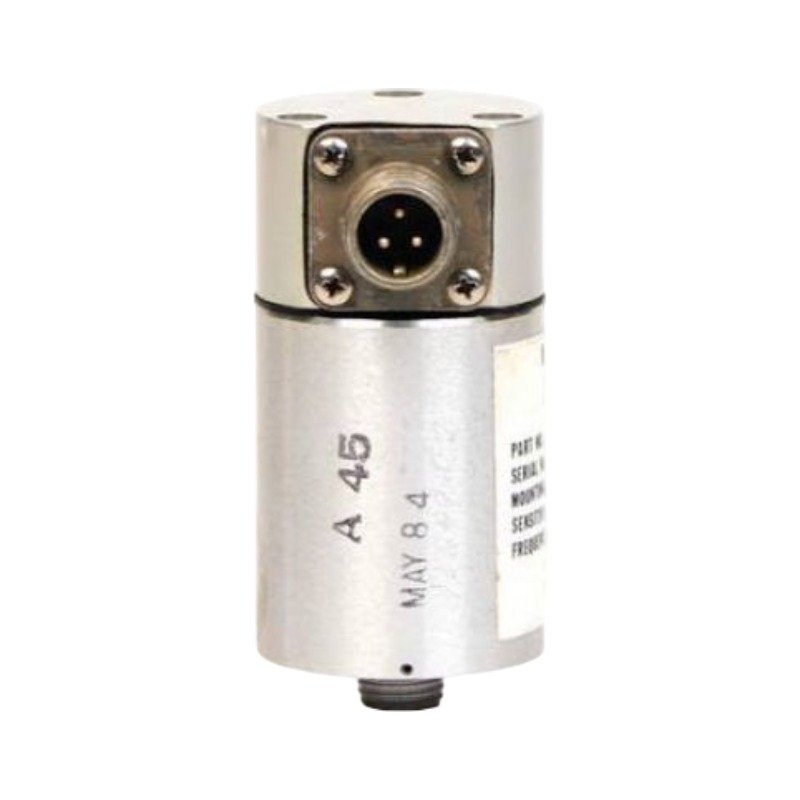
Configured for casing vibration measurement in industrial rotating machinery, the Bently Nevada 16699-10-02-02 (16699 Velocity Seismoprobe) provides direct physical/electrical execution.
Eddy-Current Probe Scaling and Gap Voltage Validation
Because this moving-coil velocity transducer operates passively, it generates its own raw voltage signal directly proportional to the casing velocity instead of using external proximitor drivers. Consequently, during multi-sensor commissioning alongside proximity probes, technicians execute gap voltage validation to eliminate signal contamination on the shared machinery protection rack. The internal architecture of the transducer suppresses cross-talk between high-frequency transmission paths, which directly prevents phase anomalies that distort local rotor dynamics evaluation. Furthermore, the 3500/42M or 3300 monitor modules scale the incoming calibration profiles according to the 100 mV/mm/sec high-sensitivity option, converting the mechanical case velocity into clear diagnostic variables without tracking a -10 VDC DC bias voltage.
Frequently Asked Questions
Q: Does the 16699-10-02-02 transducer require an external DC power supply to generate the vibration signal?
A: No, the sensor uses an internal moving-coil design that generates an analog voltage output purely from mechanical motion, which entirely eliminates the need for external loop power.
Q: How does the omnidirectional (10 option) mounting design function compared to single-angle options?
A: The internal spring-mass assembly balances the internal mechanics across any orientation from 0 to 180 degrees, allowing a single transducer model to serve in vertical, horizontal, or inverted mounting configurations.
Field Installation Guidelines
Mechanical Torque Assignment: Mount the circular base onto a flat, machined horizontal surface using a 1/4-28 UNF stud. Next, apply a torque specification of exactly 5.6 N-m to ensure uniform mechanical coupling across the interface.
Shield Grounding: Terminate the shielded twisted-pair cable shield at the monitoring rack instrument ground bus bar. Specifically, isolate and trim back the shield at the top-mounted two-pin MIL-C-5015 connector housing to prevent ground loop currents from introducing noise into the signal path.
Conduit Routing: Route the transducer cable through rigid or flexible metal conduit sections. Consequently, segregate these sensor runs from power cabling by at least 300 mm to suppress electro-magnetic cross-talk from nearby motor components.
Additional information
Weight
0.32 kg
Dimensions
110 × 80 × 60 mm
0.0
Average Rating
Rated
(0 Reviews)
Rated
0%
Rated
0%
Rated
0%
Rated
0%
Rated
0%
Be the first to review “Bently Nevada 16699-10-02-02 Seismoprobe Velocity Transducer” Cancel reply









0.0 Average Rating Rated (0 Reviews)