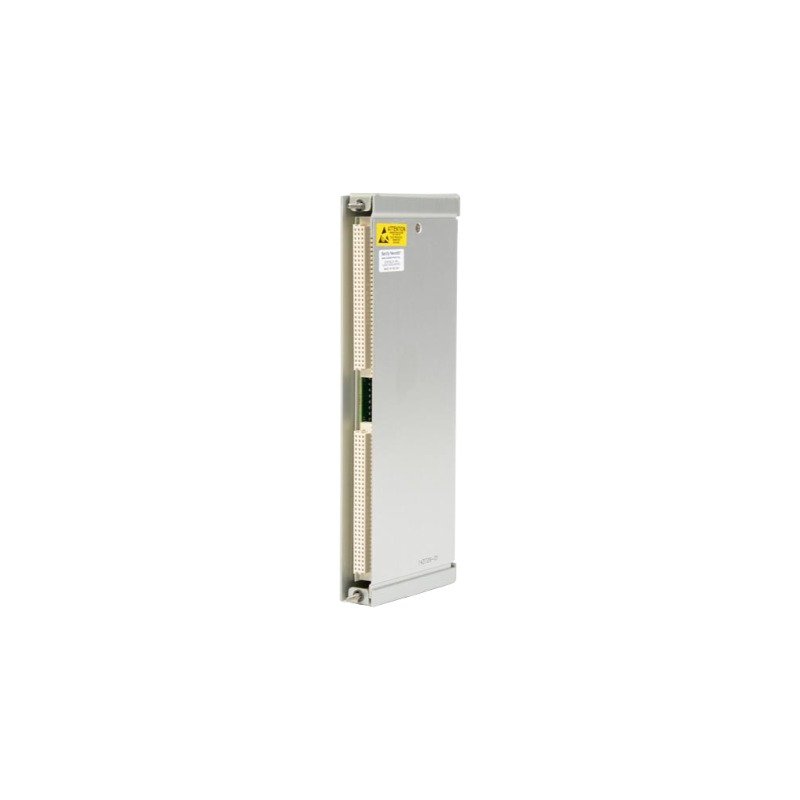
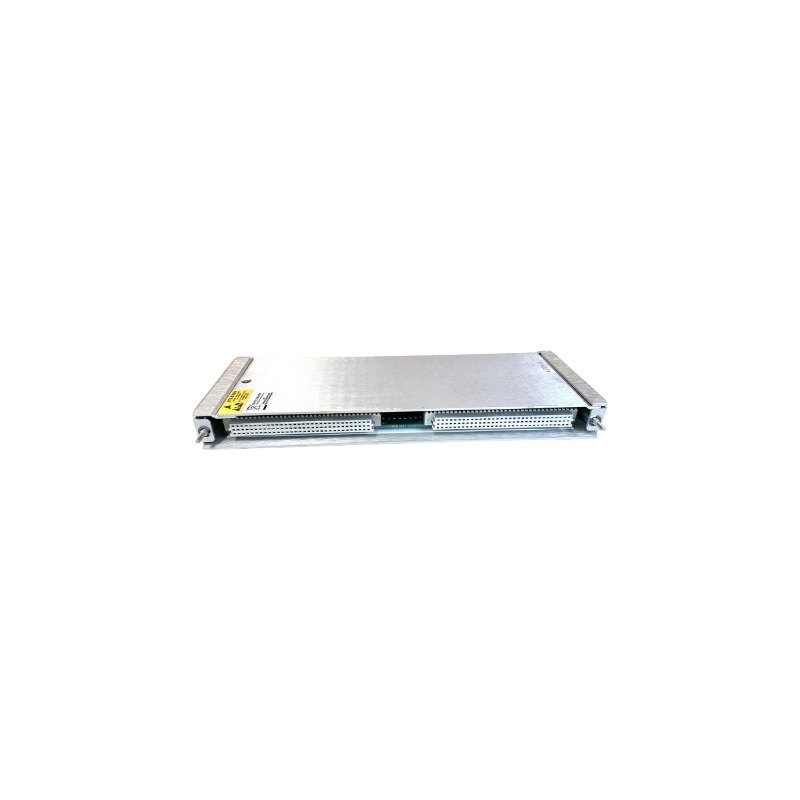
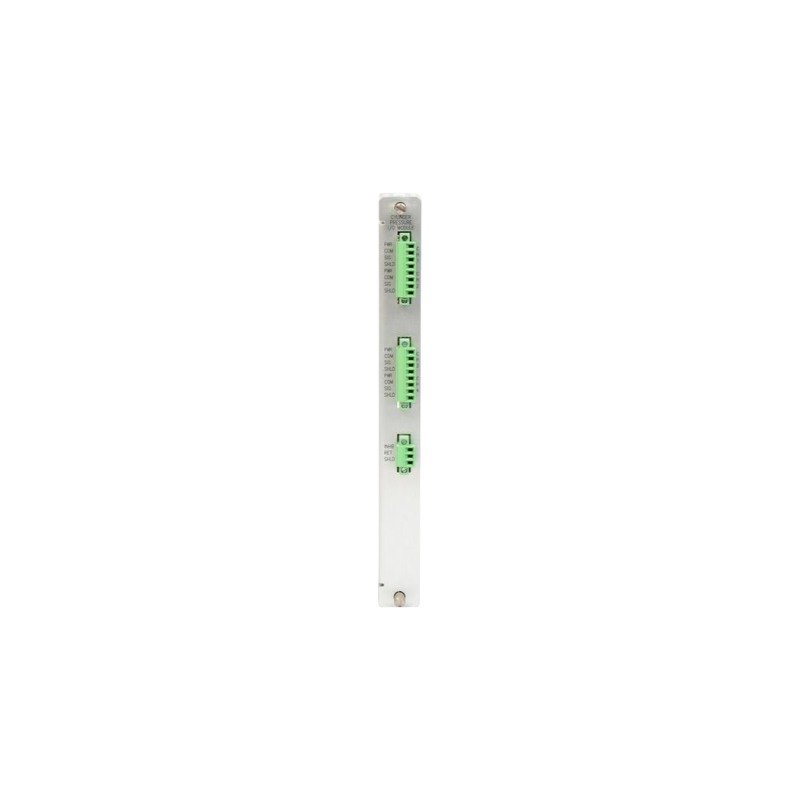
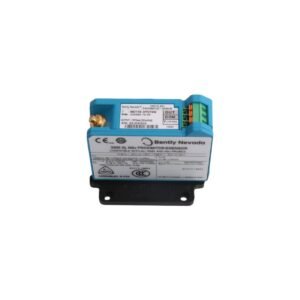
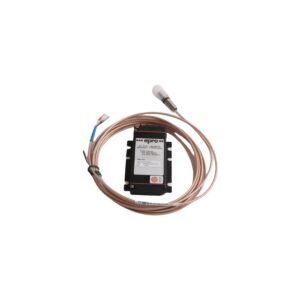
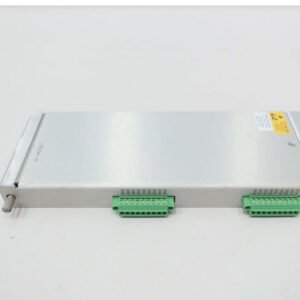
The Bently Nevada 143M6282-01, also cataloged as the 143M6282 Wireless Vibration Sensor, operates as a dedicated hardware component for triaxial acceleration and surface temperature signal acquisition within ISA100.11a wireless machinery monitoring networks. It converts high-frequency mechanical vibration signals from rotating machinery bearings and structural housings into digitized wireless payloads for real-time diagnostic platforms.
Machinery Dynamics and Signal Conditioning Attributes
The sensing module incorporates orthogonal piezoelectric elements designed to evaluate multi-plane rotor dynamics and high-frequency structural resonances. Integrated digital signal paths process raw acceleration signals prior to data transmission. While proximity transducer channels require precise eddy-current probe scaling and gap voltage validation against -10 VDC targets for shaft displacement monitoring, this sensor utilizes internal channel processing algorithms to ensure strict cross-talk suppression between orthogonal sensing axes during simultaneous high-speed spectral sampling.
Frequently Asked Questions
Q: What surface mounting preparation is required to preserve high-frequency signal integrity up to 10 kHz?
A: Measurement accuracy up to 10 kHz requires mounting the sensor directly to a flat, spot-faced machine surface finished to 1.6 um Ra or better. Avoid using magnetic bases or flexible mounting adhesives, as they attenuate dynamic vibration frequencies above 2000 Hz.
Q: How does the module prevent internal battery depletion during continuous wireless transmission?
A: Power utilization is governed by configurable wake-up interval parameters set in the wireless network gateway. Extending sleep cycles between spectral data bursts minimizes average current consumption from the internal lithium-thionyl chloride battery cell.
Q: What procedure verifies signal isolation and grounding integrity prior to commissioning?
A: The sensor housing features physical base isolation to prevent circulating ground loops. Installation verification requires measuring DC resistance between the sensor chassis and the machine mounting surface, ensuring a reading exceeding 10 M ohm before torqueing.
Field Installation Guidelines
Machine Surface Preparation: Prepare a flat, smooth mounting spot on the bearing housing free of debris, paint, or corrosion. Ensure the mounting surface roughness does not exceed 1.6 um Ra.
Mounting Hole Tapping: Drill and tap the mounting hole perpendicular to the machine casing face. Ensure a minimum of 5 full turns of thread engagement when installing the mounting stud.
Torque Specification: Fasten the sensor onto the threaded mounting interface and tighten using a calibrated torque wrench to 4.5 N m (40 in lb). Do not over-torque the sensor assembly.
Ground Loop Verification: Verify that the sensor outer case remains electrically isolated from local machine ground potential to avoid ground loop interference.
Network Configuration: Remove the internal battery isolation tab to power the unit, then register the device MAC address within the ISA100.11a gateway software to initiate network joining routines.
Additional information
Weight
0.80 kg
Dimensions
74 × 45 × 75 mm
0.0
Average Rating
Rated
(0 Reviews)
Rated
0%
Rated
0%
Rated
0%
Rated
0%
Rated
0%
Be the first to review “Bently Nevada 143M6282-01 Ranger Pro Wireless Vibration Sensor” Cancel reply







0.0 Average Rating Rated (0 Reviews)