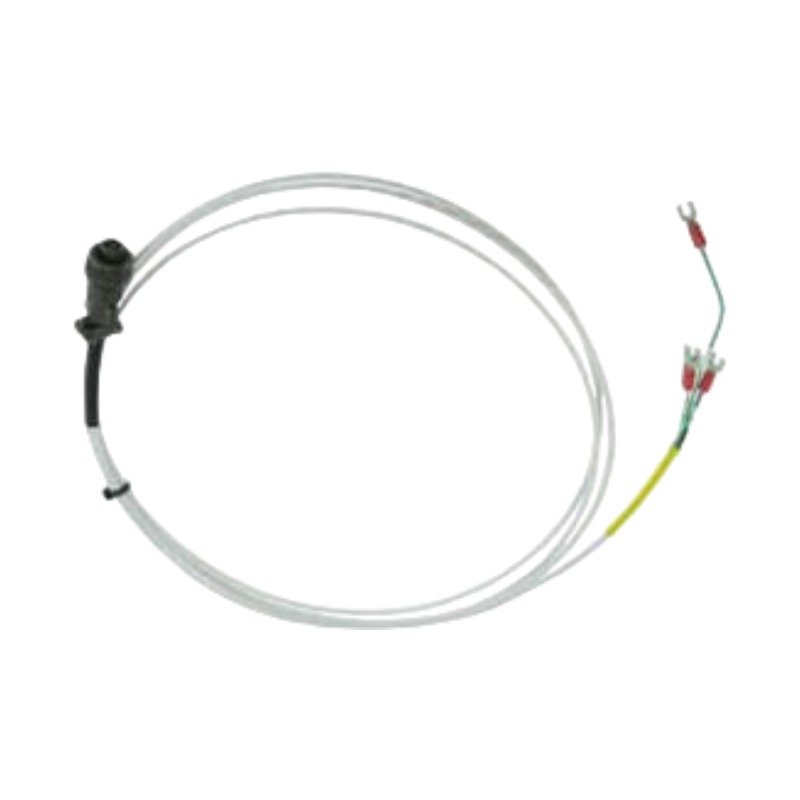
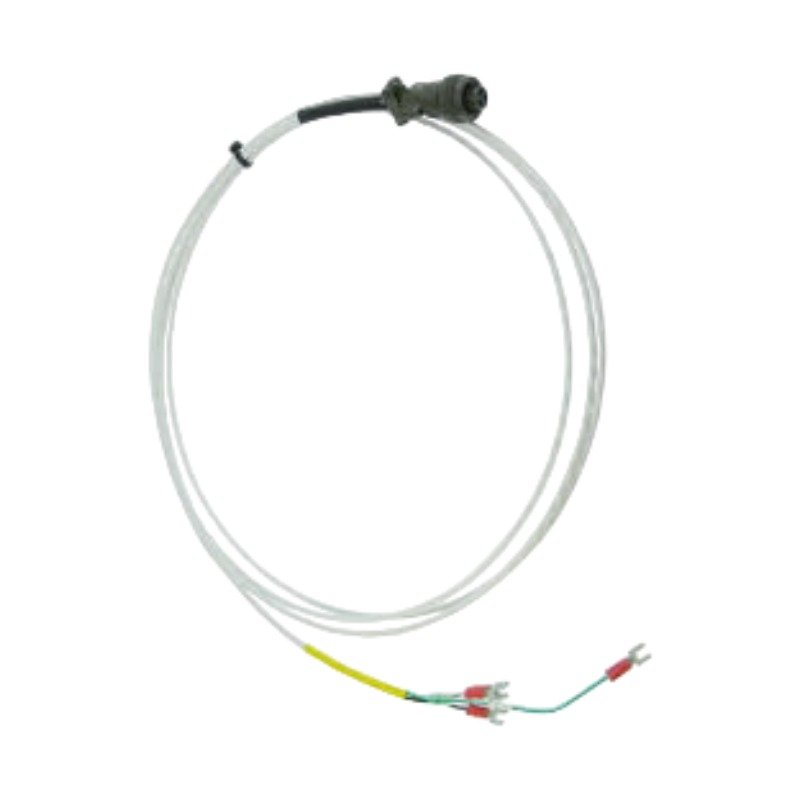
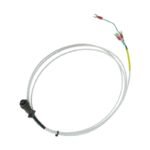
Configured for mechanical vibration monitoring in machinery protection systems, the Bently Nevada 16925-99, also cataloged as the Bently Nevada 16925 Extension Cable, provides direct physical/electrical execution. This hardware component functions as the low-loss RF coaxial linkage between a proximity probe and a Proximitor sensor. It maintains electrical impedance matching across the transmission path to prevent signal attenuation and preserve phase accuracy in dynamic shaft measurements.
Hardware Specifications
Parameter
Specification
Model
16925-99
Brand
Bently Nevada
Origin
United States
Weight
0.25 kg
Dimensions
4.0 m nominal length
Operating Temp
-51 to +177 deg C
Power Consumption
Passive component (0 W)
System Impedance
50 Ohm nominal
Cable Type
Coaxial with FEP jacket
Rotor Dynamics and Gap Voltage Validation
The physical integrity of the coaxial core directly determines the precision of eddy-current probe scaling during high-speed shaft rotation. This extension cable exhibits strict capacitance control to guarantee accurate gap voltage validation, targeting the standard -10 VDC calibration baseline for mid-scale linear range placement. Because rotor dynamics demand error-free orbit and time-base plots, the internal shielding architecture incorporates comprehensive cross-talk suppression. Consequently, this prevents mutual inductance from adjacent high-voltage machinery wiring from corrupting the low-level AC voltage signals.
Frequently Asked Questions
Q: How does the cable length affect the Proximitor sensor calibration?
A: The Proximitor system relies on a fixed electrical length to maintain correct eddy-current probe scaling. You must match the combined length of the proximity probe and the 16925-99 extension cable to the specific system configuration (typically 5.0 meters or 9.0 meters) specified by the Proximitor part number. Altering this total length introduces calibration errors in the mV/mil scale factor.
Q: Can this cable be installed in areas with exposure to synthetic lubricants?
A: Yes, the outer Fluorinated Ethylene Propylene (FEP) jacket provides chemical resistance against synthetic hydrocarbon-based and petroleum-based lubricants. It prevents fluid permeation that could otherwise alter the dielectric constant of the internal insulation and degrade signal transmission.
Field Installation Guidelines
Connector Torque and Insulation: Connect the probe-to-extension cable junction securely using standard finger-tight techniques. Apply self-fusing silicone tape or a dedicated connector protector sleeve over the junction to eliminate moisture ingress and prevent accidental grounding against the machine housing.
Minimum Bend Radius: Maintain a strict minimum physical bend radius of 25.4 mm (1.0 inch) during conduit routing to prevent structural kinking of the internal coaxial shield, which can cause local impedance variations.
Physical Isolation: Route the extension cable through dedicated, grounded metal conduit. Do not run the sensor cabling in the same tray or conduit as high-current AC power lines or variable frequency drive (VFD) output cables to mitigate electromagnetic interference.
Additional information
Weight
0.8 kg
Dimensions
26 × 13 × 12 mm
0.0
Average Rating
Rated
(0 Reviews)
Rated
0%
Rated
0%
Rated
0%
Rated
0%
Rated
0%
Be the first to review “Bently Nevada 16925-99 Proximity Sensor Extension Cable” Cancel reply










0.0 Average Rating Rated (0 Reviews)