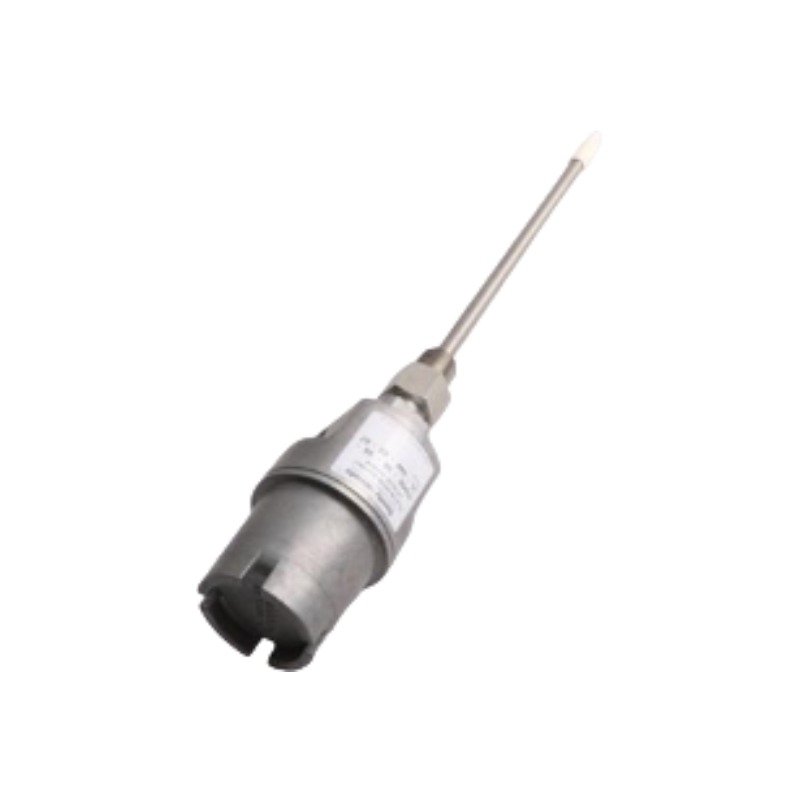
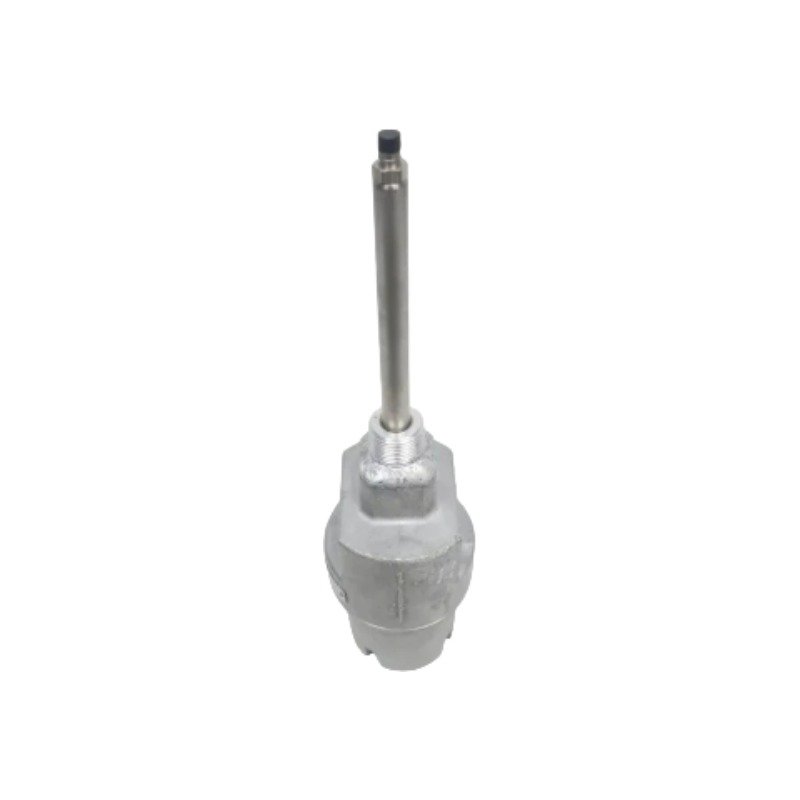
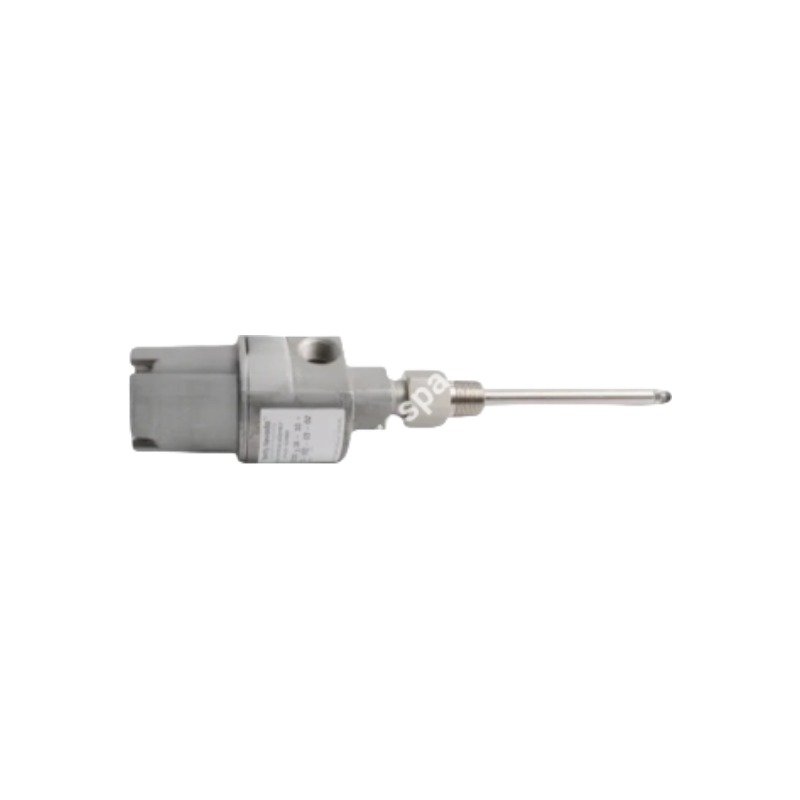
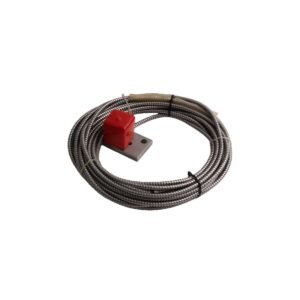
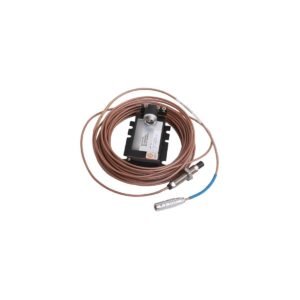
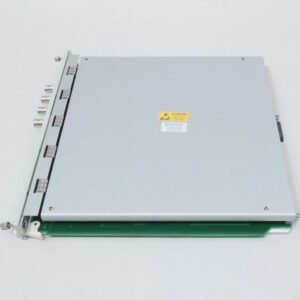
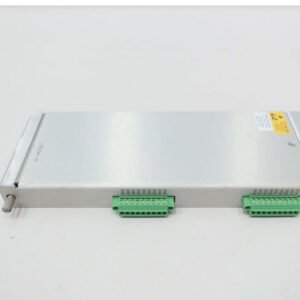
The Bently Nevada 21000-16-05-15-098-03-02, also cataloged as the Bently Nevada 21000 Proximity Probe Housing, operates as a dedicated hardware component for physical housing and mechanical protection of proximity probes within rotating machinery monitoring systems. Consequently, the assembly maintains the strict spatial positioning of eddy-current transducers relative to the target shaft. Furthermore, this heavy-duty enclosure actively shields the sensor element from external mechanical impact, environmental contamination, and corrosive process fluids. Meanwhile, it interfaces directly with transducer cables and flexible conduit networks to preserve signal integrity back to the monitoring rack.
Hardware Specifications
Parameter
Specification
Model
21000-16-05-15-098-03-02
Brand
Bently Nevada
Origin
USA
Weight
1.35 kg
Dimensions
160 mm x 95 mm x 95 mm
Operating Temp
-40 deg C to +100 deg C
Power Consumption
None (Passive Mechanical Enclosure)
Housing Material
Aluminum
Conduit Connection
3/4-14 NPT
Probe Thread Options
3/8-24 UNF
Certification
Explosion-proof, Dust-ignition proof
Eddy-Current Probe Scaling and Gap Voltage Validation
To ensure proper calibration, technicians must strictly adhere to eddy-current probe scaling and gap voltage verification rules within the Bently Nevada 21000 housing. Therefore, during the initial installation phase, the field engineer mechanically adjusts the proximity probe inside the housing until the system achieves a nominal gap voltage target of -10 VDC. This specific voltage represents the exact midpoint of the linear range for standard 200 mV/mil (7.87 V/mm) proximity transducer systems. Additionally, precise mechanical micro-adjustments actively prevent signal saturation and eliminate cross-talk suppression issues. Conversely, incorrect probe positioning shifts the quiescent operating point completely out of the calibrated rotor dynamics linear region, which ultimately corrupts the dynamic vibration or thrust position data transferred to the 3500 series monitoring system backplane.
Frequently Asked Questions
Q: How does the installation technician actively validate the physical gap voltage within the 21000 housing?
A: First, the technician connects a digital multimeter directly to the PROXIMITOR terminal strip or the front panel BNC jack of the monitor module. Next, the operator slowly threads the probe into the housing until the multimeter registers a steady target value of -10 VDC, which confirms that the sensor occupies the center of its calibrated linear range.
Q: Does the 21000 housing utilize active electronic filtering components to suppress signal cross-talk?
A: No, the 21000 housing functions purely as a passive mechanical enclosure. Instead, internal probe cable shielding, correct physical separation of signal wiring, and proper grounding configurations inside the Proximitor sensor housing manage all cross-talk suppression.
Field Installation Guidelines
Secure the assembly by executing a minimum of 5 full threads of engagement for the NPT conduit connections, thereby maintaining the official explosion-proof sealing ratings.
Verify the electrical isolation by checking that the probe cable outer shield continuously isolates from the internal walls of the aluminum housing, preventing unwanted ground loops.
Apply a high-strength thread-locking compound to all external mounting bolts to mitigate the loosening effects caused by high-amplitude rotor dynamics and machine casing vibration.
Protect data transmission by maintaining a minimum bend radius of 25.4 mm (1.0 inch) on internal coaxial cables, which prevents structural deformation of the dielectric layer and eliminates local impedance variations.
Additional information
Weight
1.35 kg
Dimensions
30 × 35 × 30 mm
0.0
Average Rating
Rated
(0 Reviews)
Rated
0%
Rated
0%
Rated
0%
Rated
0%
Rated
0%
Be the first to review “Bently Nevada 21000 Proximity Probe Housing” Cancel reply






0.0 Average Rating Rated (0 Reviews)