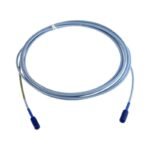
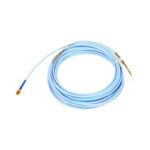
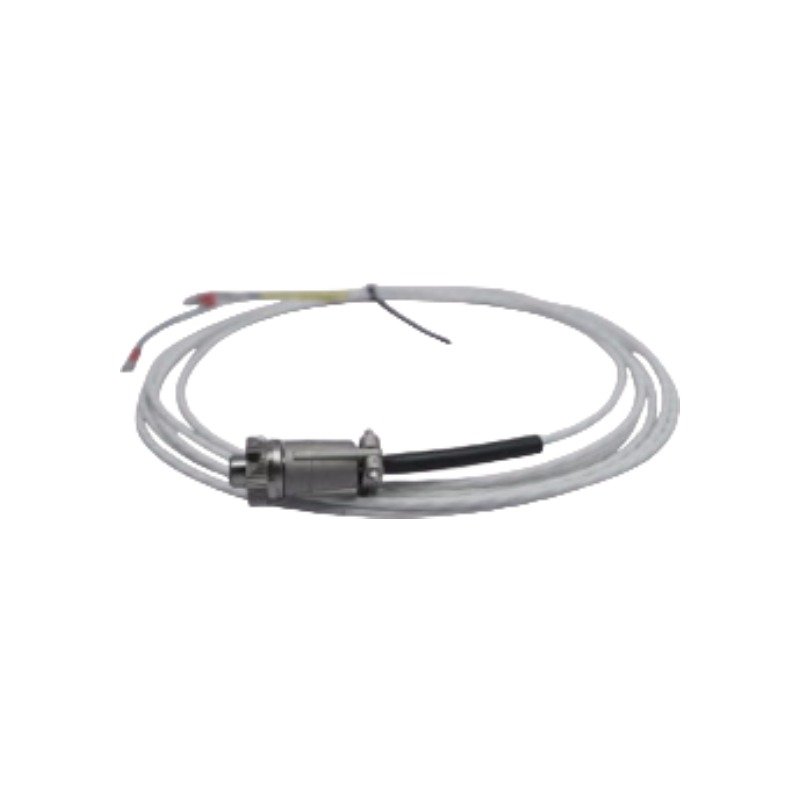
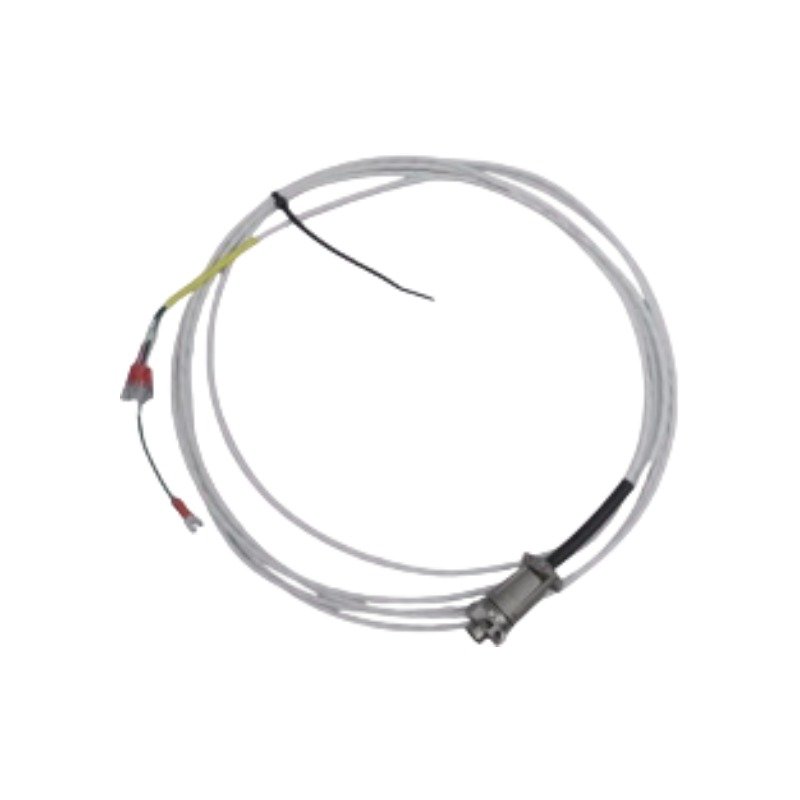
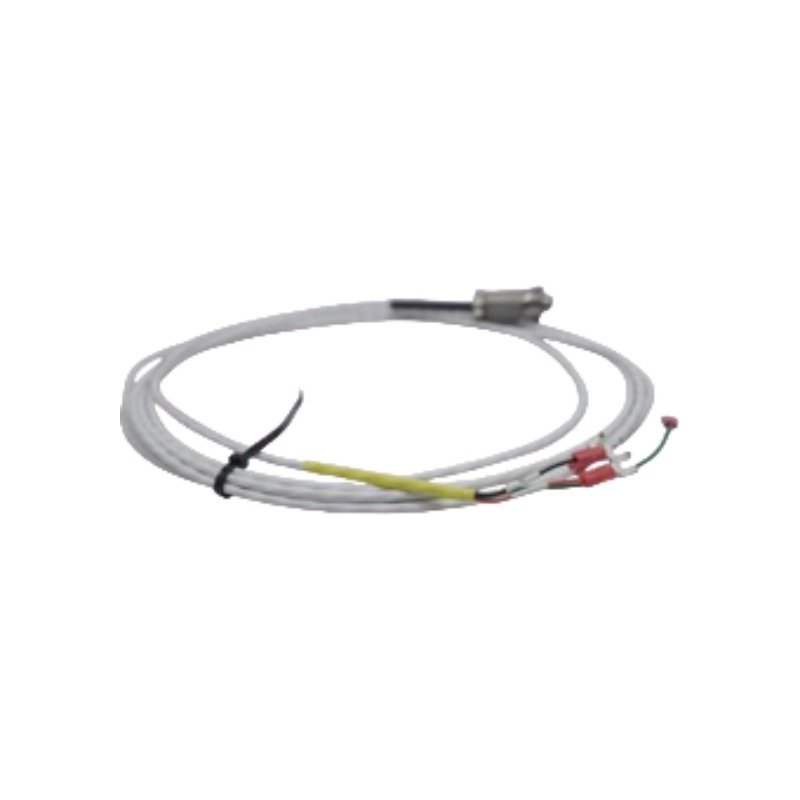
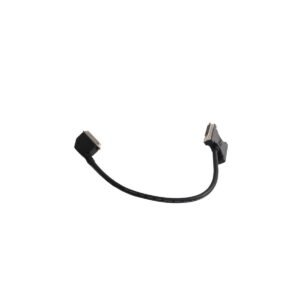
The Bently Nevada 16925-25, also cataloged as the 16925 Interconnect Cable, operates as a dedicated hardware component for dynamic vibration signal transmission within machinery monitoring systems. Configured as an unarmored, 3-conductor shielded layout, this cable interface directly links seismic velocity and acceleration transducers to system monitor racks, routing analog voltage signals while protecting raw wave inputs from high-frequency industrial plant floor interference.
3-socket moisture-resistant threaded plug to presoldered terminal lugs
Machinery Monitoring and Transducer Interface Dynamics
The internal twisted 3-conductor matrix optimizes real-time eddy-current probe scaling and accelerometer signal linearity across the physical run. Consequently, gap voltage validation targets remain perfectly stable because the low-resistance core limits voltage drops over the 25-foot span. This internal balance maintains clear rotor dynamics observations, while the high-density shield layer delivers cross-talk suppression under -60 dB to prevent adjacent phase reference signals from corrupting raw high-frequency waveforms.
Frequently Asked Questions
Q: What distinguishes the 16925-25 unarmored cable from the 16710 armored cable series?
A: The 16925-25 lacks the external flexible stainless steel interlocked conduit, resulting in a lower weight, a smaller outer diameter, and a tighter bend radius. This makes the unarmored version ideal for installation inside rigid protective conduits or closed wireways where external crushing forces are not a factor.
Q: What specific diagnostic action occurs if the internal shielding breaks or shorts to ground?
A: A shield fault introduces electromagnetic noise into the signal path and shifts the transducer bias voltage. The connected monitoring rack instantly detects this change, flags a channel “NOT OK” hardware error, and blocks associated safety alarm circuits to prevent false machinery protection trips.
Field Installation Guidelines
Connector Sealing and Seating: Thread the 3-socket plug onto the accelerometer base firmly. For outdoor installations or washdown areas, apply an approved silicone lubricant to the threads or wrap the junction with self-amalgamating waterproofing tape to prevent moisture ingress from degrading the internal contact pins.
Shield and Drain Wire Isolation: Terminate the bare drain shield wire only at the system rack ground bar. Leave the shield floating and isolated at the machine junction box or transducer end to prevent parasitic ground loop currents from introducing noise into the vibration metrics.
Routing and Bend Radius Restrictions: Secure the FEP jacketed cable along structural steel supports using padded cable ties. Maintain a minimum static bend radius of 2.5 inches (64 mm) across all routing paths to avoid pinching the internal 22 AWG conductors or tearing the aluminum foil shielding layer.
Additional information
Weight
0.83 kg
Dimensions
35 × 30 × 40 mm
0.0
Average Rating
Rated
(0 Reviews)
Rated
0%
Rated
0%
Rated
0%
Rated
0%
Rated
0%
Be the first to review “Bently Nevada 16925-25 Transducer Interconnect Cable” Cancel reply







0.0 Average Rating Rated (0 Reviews)