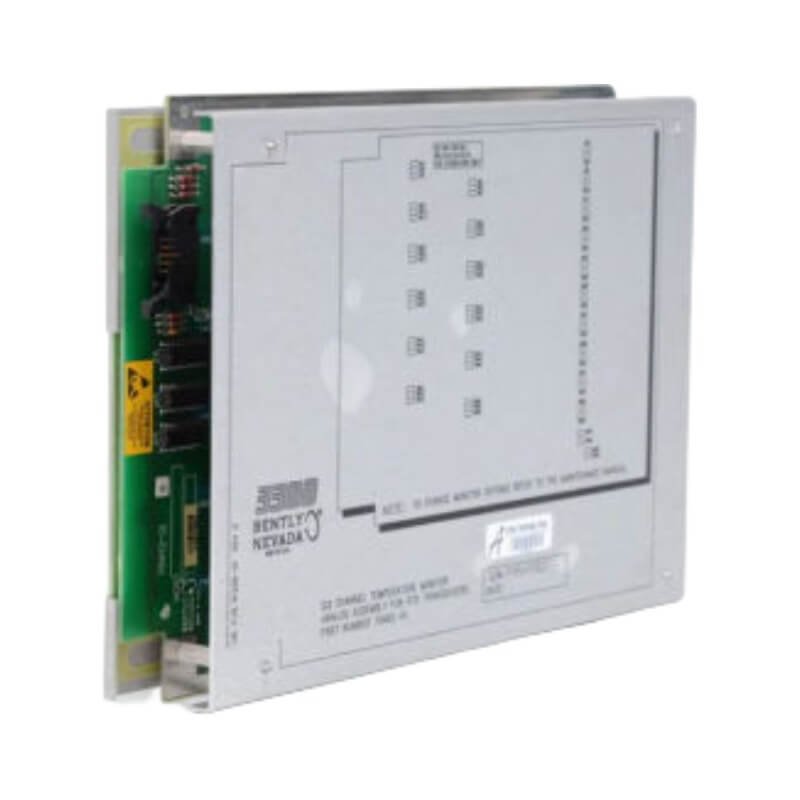
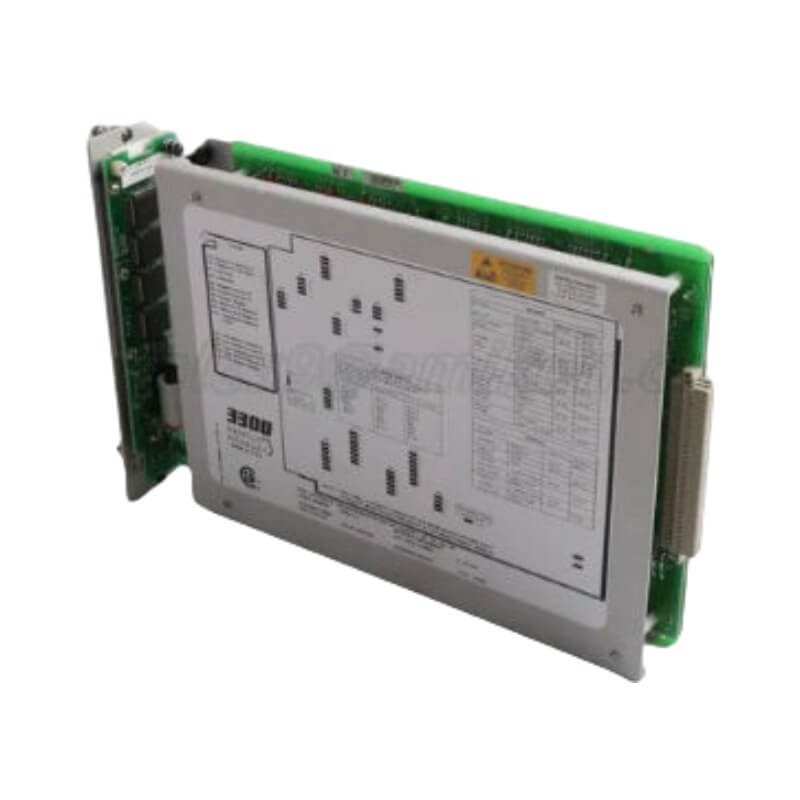
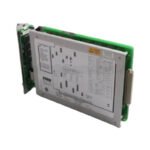
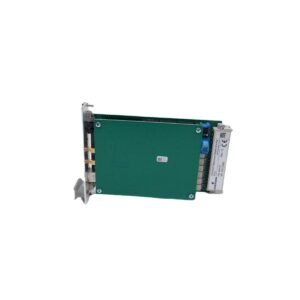
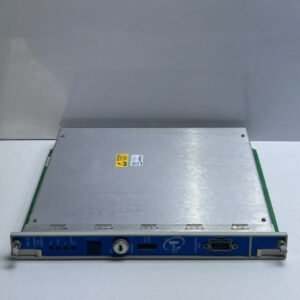
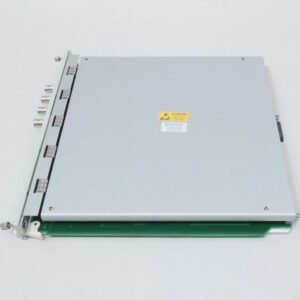
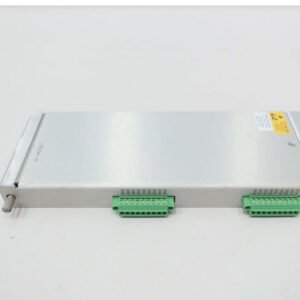
Configured for continuous machinery protection and shaft displacement monitoring in high-pressure industrial systems, the Bently Nevada 3300/45-01-01-02-00 (3300/45 Dual Position Monitor) provides direct physical/electrical execution. This rack-mounted hardware processes incoming transducer signals to track axial thrust or radial position deviations within standard 3300 Monitoring System configurations.
Suffix Breakdown & Model Matrix
3300/45: Core product identifier for the Dual Position Monitor Module.
01: Channel Type option specifying a dual-channel axial thrust position configuration.
01: Transducer Input option configured for standard 3300 XL 8 mm proximity probe and Proximitor sensor compatibility.
02: Internal circuit and faceplate hardware modification option.
00: Agency Approval option designating a standard industrial base build without specialized environmental variants.
Hardware Specifications
Parameter
Specification
Model
3300-45-01-01-02-00
Brand
Bently Nevada
Origin
USA
Weight
0.90 kg nominal
Space Requirements
One dedicated rack position (Slots 3 through 14)
Current Consumption
190 mA nominal from the backplane bus
Operating Temp
0 deg C to +65 deg C
Signal Outputs
Proportional 4-20 mA or 0-10 VDC recorder outputs per channel
Rotor Dynamics and Signal Conditioning
Consequently, the 3300/45-01-01-02-00 hardware executes continuous DC bias voltage evaluation to verify mechanical displacement data across both channels. During high-velocity rotation, the module processes raw radio-frequency signals to execute precise gap voltage validation, tracking variations against nominal -10 VDC targets to calculate exact surface distances. Meanwhile, the input filtering plane maintains aggressive cross-talk suppression between parallel sensor circuits. This electrical isolation prevents adjacent eddy-current fields from injecting parasitic noise, preserving structural signal integrity for critical rotor dynamics analysis and over-thrust protection.
Frequently Asked Questions
Q: What differentiates the 3300/45 monitor from a standard radial vibration monitor?
A: Because axial positioning involves slow-moving or static structural shifts of the shaft relative to the bearing face, the 3300/45 monitor isolates and evaluates the DC component of the proximity probe signal. Conversely, radial vibration monitors analyze the high-frequency AC components of the waveform.
Q: How does the monitor safeguard the machinery control network if a field transducer wire breaks?
A: When a probe line fails or drops signal, the internal Not OK/Signal Defeat circuit instantly illuminates the front-panel Not OK LED indicator. Consequently, this logic action locks downstream relay execution to prevent a false machinery trip.
Field Installation Guidelines
Module Insertion: First, align the circuit board edge connectors with the plastic guide tracks of the target 3300 rack slot. Next, push the module firmly forward until it seats completely into the passive backplane. Finally, secure the faceplate retention screws to establish continuous chassis ground grounding.
Transducer Shielding: Terminate all coaxial extension cable shields explicitly at the designated rear terminal block ground strip. Conversely, never ground the shield layer at the machine casing or intermediate junction boxes, as single-point termination stops ground loops from corrupting the low-voltage telemetry.
Wiring Separation: Route the analog recorder loop wires and discrete alarm relay lines through separate, dedicated conduits. Furthermore, isolate these diagnostic paths from three-phase AC motor leads and variable frequency drive cables to suppress external inductive noise coupling.
Additional information
Weight
1 kg
Dimensions
32 × 20 × 12 mm
0.0
Average Rating
Rated
(0 Reviews)
Rated
0%
Rated
0%
Rated
0%
Rated
0%
Rated
0%
Be the first to review “Bently Nevada 3300/45-01-01-02-00 Dual Position Monitor” Cancel reply










0.0 Average Rating Rated (0 Reviews)